
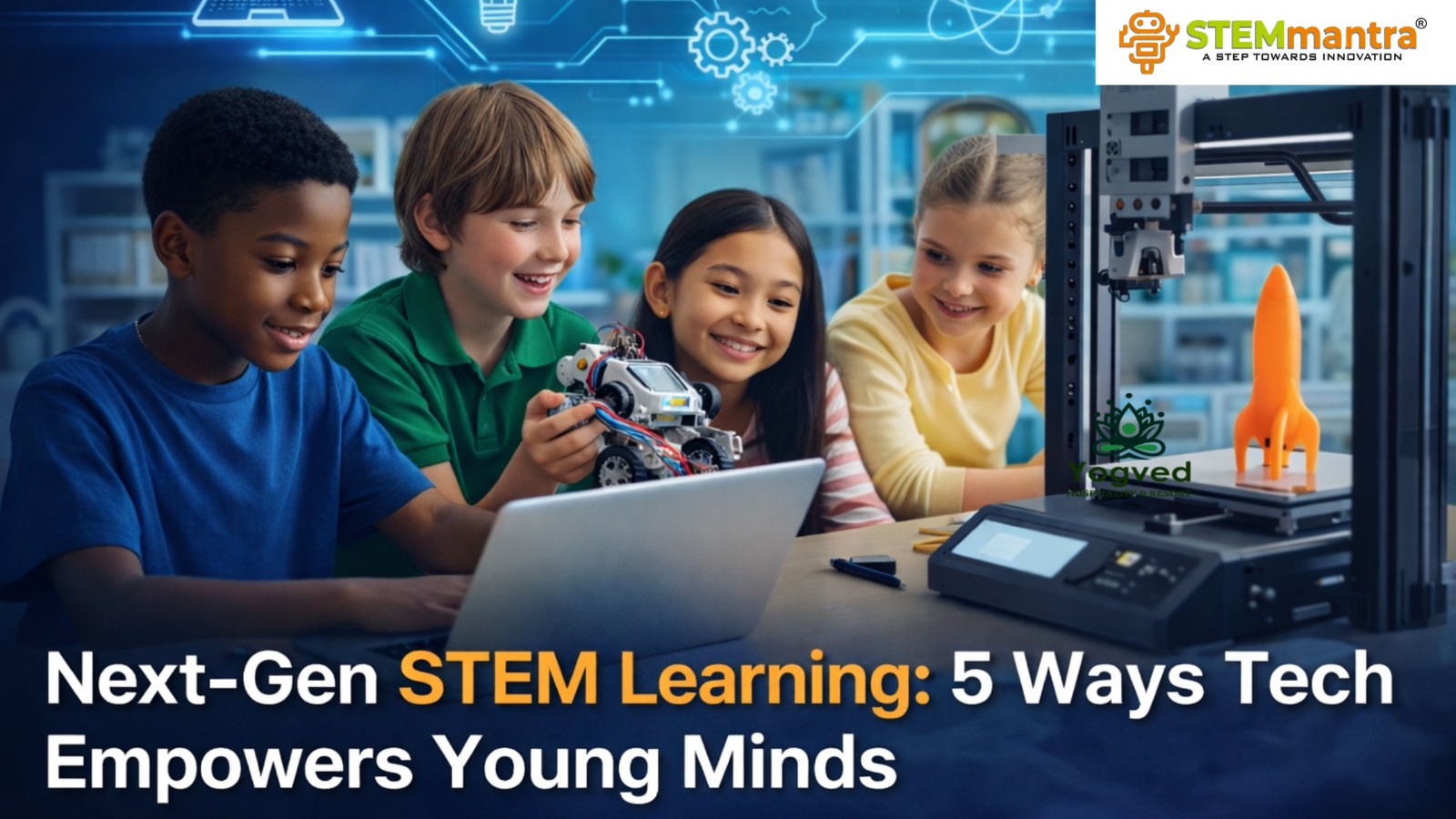
Next-Gen STEM Learning: 5 Ways Tech Empowers Young Minds
Technology alters the learning process of STEM subjects for students. Digital learning tools are now interactive and used in classrooms. The lessons are creative and based on exploration. Students tackle problems in a virtual space in an engaging way. Simulations facilitate complex concepts. Cooperation is enhanced through integrated learning systems. Educators monitor the progress utilising intelligent analytics. Individualised learning tracks support diverse talents. STEM learning encourages curiosity and experimentation. Such innovations expose the learners to future careers. Young people's minds develop greater reasoning and innovativeness.
Take a look at the top 5 ways STEM learning is empowering young minds:

1. Simulations through Interactions: Develop the Ideas
Difficult science subjects are made easier to understand through interactive simulations, where students can experiment digitally to learn theoretical concepts through engaging, hands-on, richly visual experiences.
● Virtual laboratories allow repetitive experimentation with physical equipment that is not very costly.
● Real-time feedback helps the students understand the cause-and-effect relationships quite fast.
● Demonstrations help improve retention. These also foster confidence in STEM learning.
2. Artificial Intelligence Streamlines Learning Journeys
The artificial intelligence platforms for STEM learning study student performance in real time. Then, these modify the lesson difficulty and speed. This is to ensure that all learners progress efficiently, depending on their strengths and learning weaknesses.
● Adaptive exercises give specific training to struggling learners.
● The high-achieving students are allocated more difficult course modules that propel their level of advancement.
● Educators monitor the performance metrics via smart analytics dashboards.
3. Robotics Promotes Got-Your-Own-Enhanced Innovation

Robotics learning offers a platform for engaging with both engineering and coding principles through real-life projects, helping students connect theoretical concepts in the classroom to their practical implementation in technology.
● The construction of robots enhances reasoning and machine knowledge.
● The collaboration, communication, and leadership are enhanced in the activities of the team.
● The interest further extends to future technology careers because of competitions.
4. Online Learning Increases the Prospects of Learning across the World
Online collaboration tools enable students all over the world to collaborate in the process of completing STEM projects, exchange their opinions, and develop vital team-working and cross-cultural communication skills.
● Sharing of code and design projects is possible with cloud tools.
● Virtual meetings promote culture and the sharing of knowledge.
● The international competitions encourage team innovation and problem-solving.
5. Gamified Education Increases Interaction and Attendance
The gamified learning spaces can turn STEM learning into interactive games, which are reinforced by rewards, levels, and stories that keep the learners highly engaged and learning until the end.
● Achievement and points will promote regular follow-ups on lessons.
● The competitive missions enhance the skills of strategic thinking and teamwork.
● Repetition of the game enhances memory of concepts and academic self-confidence.

Conclusion
STEM learning is technology-based and produces confident future innovators. The interactive tools encourage innovation and experimentation. Individual systems meet different learning needs. Robotics and teamwork enhance practical innovation. Gamified learning sustains motivation and interest. Coupled achievements get ready skilled young thinkers. Through intelligent digital technologies, classrooms continue to be transformed. This is because empowered students will possess the problem-solving skills needed in a rapidly changing global economy.


